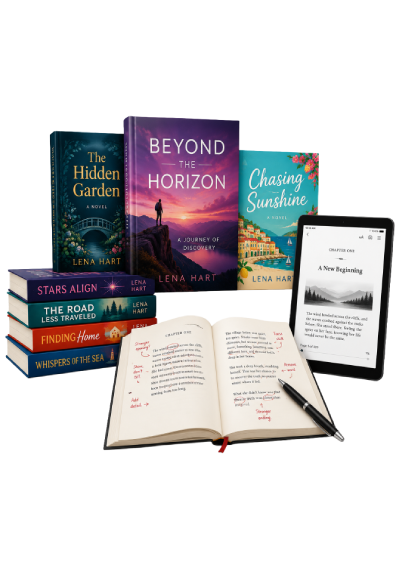
Every author dreams of readers falling in love with their story. But, the reality of publishing is far less romantic.
The sample they use is the opening of your book.
When a reader picks up a new title, they do not start at page one hundred.
This decision rests entirely on the quality of your opening. The first few pages of a book carry the weight of the entire narrative. If they fail to engage, the story remains unread. If they succeed, the reader embarks on the journey you created.
Today, let’s explore the power of first few pages and how to write them while engaging the readers.
Readers approach a new book with hope and skepticism. They want to find something good.
You have perhaps ten pages to prove yourself. That is not a large space.
This is a tall order. Professional authors spend weeks on these pages.
Think about your own reading habits. You walk into a bookstore or browse online.
You read the first line. You read the first paragraph.
If the writing feels weak, you put the book down. If the character seems boring, you move on.
What exactly makes an opening work? There is no single formula.
A strong opening introduces a character worth following. It establishes a world worth exploring.
The best openings feel effortless. They draw the reader in without the reader noticing.
Readers connect with people, not plots. They remember characters long after they forget what happened.
Show this person wanting something. Show them facing an obstacle.
Peace is boring. Harmony puts readers to sleep. Your opening needs friction. It needs tension. It needs something slightly wrong.
The conflict does not need to be massive. A small problem works fine for now.
Let us move from theory to practice. Here are specific techniques you can apply to your own work.
Many writers start their stories too early. They show the character waking up.
Start at the moment something changes. Start when the phone rings with bad news.
Voice is your secret weapon. It is the personality behind the words.
Your voice should be clear from the very first sentence. Whether funny or serious, poetic or plain, let it shine.
Good openings raise questions. They make the reader curious.
Raise one or two intriguing questions. Why is this character running?
Even experienced authors fall into traps. These mistakes kill reader interest quickly.
New writers often fear the reader will not understand. So they explain everything at once.
This stops the story cold. The reader is not engaged.
Dream openings are tempting. They seem dramatic and exciting.
There are exceptions to this rule. Some books use dreams effectively.
Beautiful description has its place. But too much description slows things down.
Limit description to what matters. Choose details that reveal character or mood.
You think your opening is good. But you are too close to see clearly.
Read your opening aloud. Read it to yourself or to someone else.
If you get bored reading it, your reader will be bored too.
Give your opening to trusted readers. Ask them specific questions.
Their answers reveal whether your opening works. If they guess wrong about important things, revise.
Pacing determines how fast or slow your story feels. The opening pages of a book need specific pacing.
Think of starting a car. You do not floor the gas pedal immediately.
Short sentences create speed. Long sentences create reflection.
Vary your sentence length. Match the rhythm to the mood.
Opening scenes should be relatively short. They should accomplish one thing and move on.
Keep your first scene tight. Introduce the character.
Facts inform the mind. Emotions move the heart.
This connection can take many forms. Sympathy for a struggling character.
You do not have hundreds of pages to build empathy. You have a few pages at most.
When readers see themselves in a character, they connect. When they recognize a feeling or experience, they invest.
Writing the opening is only half the battle. You must also get people to read it.
Your opening chapters are your best marketing tool. Offer them for free on your website.
A strong sample converts browsers into buyers. Readers who love the first few pages will purchase the rest.
Post short excerpts from your opening online. Share a compelling paragraph.
Engage with readers who respond. Answer their questions.
A strong opening does more than sell one book. It builds a foundation for your career.
Fans leave reviews. Fans recommend books to friends.
The opening makes promises to the reader. It promises a certain kind of story.
If the middle drags, readers lose interest. If the ending disappoints, readers feel betrayed.
Writing strong openings takes practice. It takes revision.
The first pages of a book are your only chance to make a first impression.
You have something unique to offer. No one else tells stories exactly like you do.
Writing rules are guides, not chains. Use these tips as tools.
The journey of a thousand pages begins with a single word. That word becomes a sentence.
We have explored character and conflict. We have discussed pacing and voice.
Return to your manuscript now. Look at your opening with fresh eyes.
Your readers are waiting. They want to love your story.