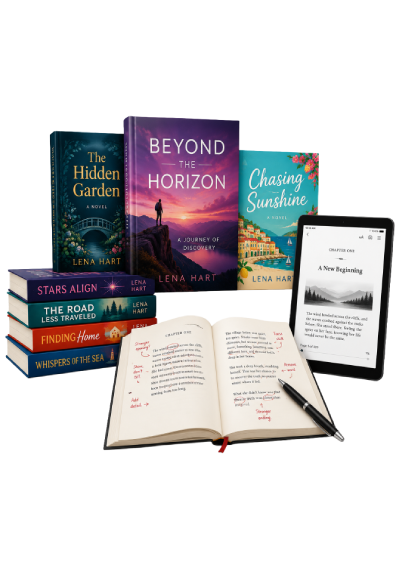
You did it. You typed “The End.” Your manuscript is complete.
But now, a new feeling creeps in. It’s not excitement.
The thought of editing your own book feels like being asked to perform brain surgery on yourself.
What if you ruin what you have created? Or what if you miss a ton of typos?
Every single author goes through this stressful situation. The journey from a rough draft to a
polished, publish-ready book isn’t about magic. It’s about a method. We are going to walk
through a practical, week-by-week plan.
We will tackle everything with precision. By the end, you will have a manuscript you are
genuinely proud to send into the world. We will also talk about book editing services and how
professional people can be the right help! Let’s begin.
Why Editing Feels So Hard (and How This Plan Fixes It)
Editing is hard because we try to do everything at once. We read a page and think about commas, a
clumsy sentence, a plot hole, and a confusing character all in the same moment. Our brain
short-circuits and we give up.
The key is separation. Think of your book like a house you just built.
- First, you check the structure – are the walls sound? Does the floor plan
make sense? (This is developmental editing).
- Then, you look at the details – is the drywall smooth? Are the doors hung
properly? (This is line editing).
- Finally, you do the final cleanup – painting, cleaning windows, making
everything spotless (This is proofreading).
You would never paint the walls before you knew the house is structurally sound.
Your 6-Week Editing Roadmap
Grab your manuscript. Save a new copy by calling it as editing draft.
WEEK 1: THE BIG PICTURE AUDIT
Read like a reader, imagine how they will feel when they go through your book.
Goal: Forget the words. Focus on the story’s foundation.
This week, you are not the writer. You are the most interested, critical reader.
YOUR WEEK 1 TOOLKIT
- A printed copy of your manuscript or a tablet/eReader.
- A notebook and a red pen.
- A highlighter.
THE PROCESS
- Read it in a new format. Don’t read on your
computer screen. Print it or send it to your Kindle. Changing the format helps you see it
with fresh eyes.
- Read it fast. Try to read it in 1-2 sittings.
Mimic the experience of a reader.
- Take notes ONLY on big issues. Use your
notebook or the highlight/note function.
- Plot: Where did you get bored? Where were you
confused? Does the ending feel satisfying?
- Characters: Did any character act in a way
that felt “off”? Are their motivations clear?
- Pacing: Are there sections that drag? Parts
that feel rushed?
- Logic: Do you spot any plot holes? Things
that just don’t make sense?
At the end of the week, you will have a list of big-picture notes.
WEEK 2 & 3: REWRITING & SHAPING THE STORY
Goal: Tackle the structural notes from Week 1.
Now, you are acting as the writer again. Open your manuscript file.
TIPS FOR WEEKS 2 & 3
- Don’t be precious. Be willing to “kill your
darlings” meaning be ready to cut sentences,
paragraphs, or even chapters that don’t serve the story.
- Fix logic first. Address any plot holes. Make
sure the timeline makes sense.
- Strengthen weak characters. Add a scene to
clarify motivation. Cut dialogue that feels fake.
WEEK 4: THE LINE-BY-LINE POLISH
Goal: Make every single sentence shine.
With the structure locked in, we now focus on the language itself.
YOUR WEEK 4 FOCUS CHECKLIST
- Clarity: Make sure that every sentence is easy to understand. Don’t forget to
break down long
and winding sentences. Split them to give readers a breathing break.
- Strength: Analyze the verbs you are using. If they are weak verbs like was,
did, or had. Make
sure to replace them with decided, owned, or ran.
- Flow: There should always be a natural rhythm in your story. Read out the
dialogue in the
story out loud. See if the sound feels natural and not forceful.
- Repetition: Make sure not to overuse a word or phrase. For instance, instead
of using the word
“elevate” again and again, replace it with “enhance.” This gives a variety in text.
- Showing vs. Telling: When your reader is reading the book, they must feel
they are seeing
everything themselves. Instead of saying “She was sad that day.” Replace it with “her
shoulders
slumped, and she continued to stare at the floor all the time.”
This week is detailed work. It’s tiring but incredibly rewarding. You will see your writing
transform from good to great.
WEEK 5: THE SPECIALIZED PASSES
Goal: Hunt for specific types of errors.
Our brains are great at auto-correcting. We miss our own mistakes.
SCHEDULE YOUR PASSES
- The Dialogue Pass: Read ONLY the dialogue.
Does each character have a
distinct voice? Does the dialogue move the story forward?
- The Consistency Pass: Check for consistency
in names, places, dates, eye
colors, and other details.
- The “Crutch Word” Pass: We all have them
(just, really, suddenly, somehow).
Find and eliminate yours.
- The Read-Aloud Pass: This is the most
powerful tool. Read the entire
manuscript aloud. Your ear will catch clumsy phrasing and errors your eye will skip over.
WEEK 6: THE FINAL PROOF & PREP
Goal: Prepare a pristine manuscript for the next stage.
You’re in the home stretch. This week is about extreme cleanliness and getting ready for
publishing.
YOUR WEEK 6 TO-DO LIST
- Run spell check. But don’t trust it blindly.
It won’t catch “their” vs. “there.”
- Check your formatting. Ensure chapter
headings are consistent. Look for odd line breaks or page breaks.
- Create a backup. Save your final edited file
in multiple places (cloud, external drive).
- Take a final breath. You have done monumental
work.
Proofreading Vs. Editing: Knowing the Crucial Difference
This is where many authors get tripped up. They are not the same thing.
- Editing (what you just did in Weeks 1-5) is about improving the content,
structure, and style of
your writing. It’s creative and analytical.
- Proofreading is the very last step. It’s about correcting surface errors in
spelling, grammar,
punctuation, and formatting.
You proofread a manuscript only after it has been fully edited and designed.
Why a Professional Edit Still Matters
You have followed this roadmap. You have worked tirelessly for six weeks.
But here’s an honest truth! You are still the closest person to your book.
This is not a failure. It’s human nature.
That’s why the final, non-negotiable step for any author who is serious about quality is to seek a professional assessment.
The Role of Editing a Book for Publishing
Be sure to be clear with proofreading vs editing first. If your goal is to sell widely, you need
more than clean prose. Editing a book includes structure, market fit, and reader expectations.
Think market fit: does your book deliver what its genre promises? If not, revise before you
invest in production.
Choose the Right Editing Tools and Support
There should always be a checklist in your hand before you finalize anything.
See, editing is a team sport, hence you need collaborative efforts to make it successful.
Final Checklist Before You Hit Publish
- Structural issues resolved.
- Line edits completed.
- Two rounds of proofreading done.
- Beta feedback implemented.
- Files formatted for all platforms.
- Book metadata ready: title, subtitle, description, keywords.
If you can tick these boxes, your book is ready for readers.
Your Next Step: from Polished Draft to Professional Product
Imagine handing your manuscript to someone who sees it with zero baggage.
This is the peace of mind and the competitive edge that professional book editing provides.
So, who can provide this final, critical layer of excellence? This is where finding the right partner matters.
Your roadmap is complete. Your manuscript is ready. Now, take the final, confident step to make
it truly unforgettable.